Category Archives: quotes

My Favorite Quote of 2009

It’s 1:30 AM in Amman at our Super Bowl Party. Emily: “The only thing that would make the Super Bowl better is if Obama was there.” So true, Emily, so true.

A Franciscan Benediction

“May God bless you with discomfort at easy answers, half truths, and superficial relationships so that you may live deep within your heart. May God bless you with anger at injustice, oppression and exploitation of people so that you may work for justice, freedom and peace. May God bless you with tears to shed for those who suffer pain, rejection, starvation, and war so that you may reach out your hand to comfort them and turn their pain into joy. And may God bless you with enough foolishness to believe that you can make a difference in the world, so that you can do what others claim cannot be done.” Courtesy of Jim and Sara’s blogs

I want to love you the most

There’s so much said these days on the topics of love, dating, and marriage. It dominates every song and infiltrates every film. There is a love story in every plot because that’s what people want to hear. I can’t even begin to tell you how sick I am of books “encouraging” single women as they “wait for their husband,” as if he’s just going to fall out of the sky and then life will begin. I hate that stuff because it isn’t what life is about. Life is about living each moment to the glory of God. If that’s as a wife, then I will be blessed to experience the incredible and beautiful analogy of Christ and the Church. But as me, just me, serving Him the best I know how, life doesn’t mean waiting on a husband or even a job. I am called only to wait on the Lord. There is no waiting for life to start. It started when He knew my name in my mother’s womb, and it ends when he says it does. Who am I to dictate things in my life such as love? Of course I want to fall in love, but my greatest fear is loving someone too much – more than I love my God. So I will keep growing in love with Him more until I can also love someone else. Jesus, I want to love you the most.

Oh God, I don’t love you, I don’t even want to love you, but I want to want to love you!
-Teresa of Avila

Not On Our Watch, a Book Review


I just finished reading Not On Our Watch: The Mission to End Genocide in Darfur and Beyond. Co-written by a celebrity, the book received notable recognition. I got my copy for supporting a Save Darfur campaign. The authors, Don Cheadle (Crash, Hotel Rwanda, Oceans 11) and John Prendergast, create a balance in the book so that it is as personal as it is informative. Prendergast, a former official in the Clinton administration, has traveled and worked for peace and equality in Africa for many years and in many capacities. His knowledge and experience with African conflicts are vast, as illustrated in this book. Don Cheadle did not necessarily impress me with his writing, but he contributes a realistic perspective from a non-professional activist. The authors explain the background of the conflict in Darfur as well as their personal paths to being involved in ending the genocide. Sudan has such a long history of war, with many parties involved. The most difficult thing about the current situation is the ambiguity of information. To say the least, it is a confusing subject, with many disputed details. Still, the chapters in Not on Our Watch are succinct and informative. The main idea of the book is how to put activism in action to end genocide in Darfur and prevent it elsewhere. Prendergast gives great insight on why problems in Africa are so quickly ignored and why the United States imparticular is guilty of neglecting conditions violating human rights. “In order to win peace in Sudan,” Prendergast writes, “we must first win an ideological battle at home. We must show that combating crimes against humanity is as important as combating terrorism.” Not only are Americans less concerned with humanitarian needs, they are also apathetic toward yet another tragic story in Africa. After so many famines and wars, the world stops listening. This is called “conflict fatigue.” Prendergast concludes that in order to promote stability in Africa, “we need to build a popular constituency for Africa.” In other words, if people are aware of the positive accomplishments in Africa and the potential thereof, a response from the general public and consequently prominent world powers would meet problems in Africa with optimistic solutions rather than pity. The strategy of the Save Darfur Organization, as well as the authors of this book, is to encourage American citizens to take political action to end the genocide. Rather than just donating money to support the victims, Americans must use their voices to get to the root of the conflict by petitioning their representatives.

But it took me a few more years to figure out that while food and medicine were crucial, they were not the sole solutions. I began to see the political roots of the lack of response from my country and the larger Western world. – John Prendergast

The book outlines “Six Strategies for Effective Change:”

  • Raise Awareness
  • Raise Funds
  • Write Letters
  • Call for Divestment
  • Join an Organization
  • Lobby the Government

The authors illustrate how in the past these strategies have been effective in humanitarian crisis situations globally and in Sudan. I would recommend this book for it’s informativeness and readability. I think the message of this book can be summed up in this quote by Gerald Martone, International Rescue Committee:

In the public portrayal of humanitarian situations our profession has often reduced massive suffering to a charitable appeal. The depiction of reprehensible brutality is simplified to merely needing benevolent relief. Humanitarian emergencies are not merely health crises, they are epidemics of human rights abuses. We must communicate complex situations as moments for international action not merely remedied by Western do-gooders and the provision of supplies. Our communication should invite action, outcry, and engagement.


Quote of the Day

Idolatry is the practice of ascribing absolute value to things of relative worth. Under certain circumstances money, patriotism, sexual freedom, moral principles, family loyalty, physical health, social or intellectual preeminence, and so on are fine things to have around, but to make them the standard by which all other values are measured, to make them your masters, to look to them to justify your life and save your soul is sheerest folly.

Frederick Buechner
Wishful Thinking

Art, War, and Human Rights

This post is a culmination of all the news I’ve been thinking about this week as well as the art that helps me think about it.

On Wednesday the BBC put out an article about the war trials in Uganda. For those of you who don’t know about the situation there, it is quite similar to that of other countries in East Africa. The thing that distinguishes its conflicts from other wars and genocides is the targeting of children as soldiers and sex slaves by the Lord’s Resistance Army. The LRA has been terrorizing the region of Northern Uganda and Southern Sudan for years. Finally the LRA, led by Joseph Kony, is set to face a prosecution at the International Criminal Court in The Hague, The Netherlands. This is the first I’ve looked into the ICC past the acronym. It was established in 1998 for the purpose of unbiased prosecution of those who have committed crimes against humanity. The LRA is arguing that it should only face the local traditional court in Uganda and has since suspiciously moved its leader off its base, violating a ceasefire agreement (BBC article). The ICC is supposed to only convict those that have not faced punishment in there own nation, but I have to question the legitimacy of Uganda’s local justice system. The LRA is demanding the ICC to drop charges before it continues with former agreements in Uganda. I intend to do more research on the ICC and its role in East African conflicts as well as its relationship to the United Nations. My first reaction, however, is that those who have committed such atrocities against man kind should face grave consequences and international scorn. That may sound harsh, but how much longer can these kinds of crimes go on?

Uganda’s neighbor, Sudan, is worsening by the day in its Western region of Darfur. The violence is so turbulent that aid workers are unable to get into the region. Basic food rations are unable to reach the area, compounding the problem in Darfur. In spite of receiving unprecedented coverage in the United States, the situation is slowly improving and will probably get worse if those working on policy and peace treaties can’t get to the bottom of the Sudanese government’s role in the genocide.

Please remember Darfur as you look forward to the 2008 Olympics in Beijing. China has funded Sudan’s weapons and missiles for years and is imperative in ending the genocide. China’s withdrawal of support to Sudan could help end the killing much sooner than policy makers could ever hope. Recently China has also been in the spotlight for it’s role in Tibet. The topic is mainly popular because of the role of the Dalai Lama in the past few years. Although Tibet isn’t facing a physical genocide, the Dalai Lama claims it faces a cultural one due to the alleged oppression by China. I just want to know, who gave the 2008 Olympics to China, anyway?

The greatest humanitarian crisis occurring right now is in Gaza. It has recently been dubbed
“the world’s largest prison.” I don’t think better words could be chosen. Like in Darfur, it is increasingly difficult for aid workers to bring in supplies and rations. In Darfur, guerrilla fighters are creating the danger (although the government is likely behind it), but in Gaza, it is an established government boldly and unapologetically not allowing basic items to reach human beings with virtually no rights. Situations like this make me wonder how we distinguish terrorists from soldiers and presidents from tyrants so easily.

On Sunday I went to an art exhibit in Amman. In a quaint, refurbished building overlooking the city, Lebanese photographers were featured. Many of the pieces were extremely creative, as well as highly disturbing. Lebanon has had very little time of peace since it’s first civil war. I am thankful for people that put the pain of there experiences into art, because art that comes from war is some of the most moving. There is also irony in the creations that result from acts of destruction. As I looked over the photographs of collected ammunition, abandoned homes, and exploding hillsides, I couldn’t help think of the people in Gaza. I have no idea where I’ll be in a few years, but working towards peace and reconciliation among those in the disputed territories would be a dream come true. I found a video recommended by Ralph Nader that gives hope of future peace among the conflicting cultures of the Middle East, at least peace in the hearts and minds of individuals. Encounter Point

Everything that’s happened this week has reminded me of an artist I am fond of, Bartolome Murillo. A Spanish painter, he was one of the first to paint the peasant class. The picture below, The Young Beggar, shows something very familiar to most people but to most art of his time. I appreciate art that speaks truth. Murillo’s art gives a glance into the society at that time, not at the society’s desired perception. There a lot of places in the world that don’t want to be seen for what they are – broken. But art like Murillo’s and posts like this are made for the reason that Abraham Lincoln put so eloquently: “I am a firm believer in the people. If given the truth, they can be depended upon to meet any national crises. The great point is to bring them the real facts.”

Identity Crisis

I have been thinking about why it is so challenging to transition to a new environment. Why is leaving and moving and relocating so intimidating? Everyone makes such a big deal about it and I wanted to figure out why. After a lot of thought, I realized that it has everything to do with our identity. While we Westerners might think that our society encourages independence and autonomy (as it does more so than many other cultures), it cannot be denied that we pull almost all of our worth and sense of self from our associations and places of origin. What is the first thing you ask a new acquaintance? It usually runs along the lines of “Where are you from?”
The people we know and the places we live make us who we are. Not only are we all products of our environment, we are also influenced by those around us. Patrick Kenzie in Gone Baby Gone says, “I always believed it was the things you don’t choose that makes you who you are. Your city, your neighborhood, your family.” I would add “your circumstances, your hardships, your blessings and your scars” – all of the things you didn’t choose; or rather, you couldn’t choose. These are the things that become an integral part of your being. So leaving these things can feel like leaving yourself. I think that this is what makes people so reluctant to even consider moving away from home. For me, thinking about it was a lot harder than actually doing it.
Lately, people associate me with what I’m doing. The girl that’s going to Jordan. Sometimes they insert “brave,” sometimes “crazy.” But what I do does not make me who I am. Who I am makes me do the things I do, like go to Jordan. It’s simply who God made me. We are tempted to find our identities in our jobs, goals and accomplishments because we don’t appreciate the things that have really shaped us. We didn’t have to earn them, so we don’t want to take credit for them. Or maybe we would never have picked them if given the choice.
To gather up all of those things and to look forward without forgetting, that takes a lot of grace. To anyone who is afraid to leave the place they know, I would say don’t be afraid of the unknown. If you’re lucky, where you come from has been good to you, but that doesn’t mean there aren’t other places in this world ready to welcome you, ready to enhance the person you have already become. To that person I would say, “Who are you?”
I am not a student or a traveler, although I love learning and going on adventures. I am an only child, a daughter, an orphan, a friend. I didn’t choose any of these roles, I became them.
I am thankful that there is a God who is the same yesterday, today and forever. A “perfect husband and an eternal father.” He, so unlike us, never changes. He has no fear and needs no home, yet created one for us anyway.

Social Injustice and all that good stuff

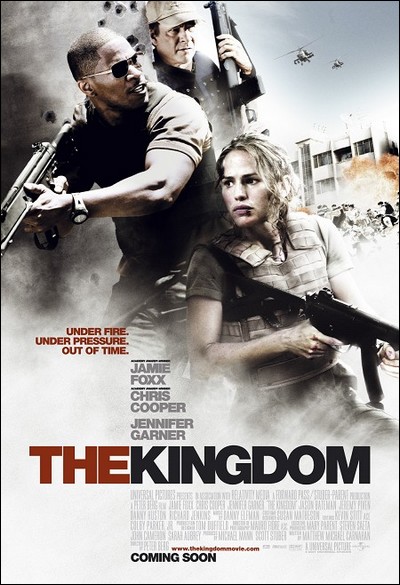
I am compelled to write on this subject because of a few things I have been watching and reading. There are two movies I really like for the same reason. Crash is an old favorite, and The Kingdom is a new one. Both basically send the message that “no one is good, not even one” (Romans 3), concluding that there will be no end to war and violence so long as there is hatred. No amount of revenge will suffice. There will never be a “war to end all wars.” Both movies deal specifically with the social problem that haunts every society: Racism. If you don’t think racism is still an issue where you live, you are fooling yourself. It is everywhere, especially here. I can’t even say “Israel” without getting people upset. Around Arabs you only call that place across the Jordan river “Palestine.”
We are all naturally prejudice against anything and anyone that is different from us. We are innately hateful and prideful. It is just an effect of the fall. Moreover, it is evidence that we cannot and will not be good or do good on our own. Everyone needs the reconciling message of the Gospel, or else chaos ensues.
For whatever reason, I am drawn to victims of racism and prejudice. Maybe this is because they are such stark reminders of the sin in this world and the damage evil can do. A vast majority of the refugees I have worked with are the result of genocide, an obvious example of racism at work. It is easy to be angry at the evil doers and makers of war; however, “the anger of man does not achieve the righteousness of God” (James 1:20). I hope for world peace just as much as anyone else, but more so I pray for the peace that comes to people only through Jesus. An author I was recently introduced to talks about how we, as Christians, are to treat socially oppressed people such as these, as well as their oppressors:

I am going to Iraq because I believe in a God of scandalous grace. If I believed terrorists were beyond redemption, I would need to rip out half of my New Testament Scriptures, for they were written by a converted terrorist. I have pledged Allegiance to a King that loved evildoers so much He died for them [and of course the people of Iraq are no more evil or more holy than the people of the US], teaching us that there is something worth dying for but nothing worth killing for… We are all wretched, and we are all beautiful. No one is beyond redemption. May we see in the hands of the oppressors our own hands, and in the faces of the oppressed our own faces. We are made of the same dust, and we cry the same salty tears. -Shane Claiborne (Quote borrowed off of Jim’s blog)

I think that if we come to this point of understanding, we can in turn find “true and undefiled religion…to visit orphans and widows in their distress” (James 1:27), no matter what their background or differences from ourselves. I encourage you to find the prejudices in your own heart that might be hindering you from “walking in love” (Ephesians 5:2). If this doesn’t convince you, the last scene in The Kingdom definitely will.

“As it is written, ‘There is none righteous, not even one…There is none who does good, there is not even one'” (Romans 3:10,12).


Quotes To Live By

“Not all who wander are aimless, especially those who seek truth beyond tradition…beyond definition…beyond the image.” – Mona Lisa Smile

“We are born not once, but again and again.” – Ralph Waldo Emerson

“Life is either a daring adventure, or nothing.” – Helen Keller

“Whatever of Thyself Thou hast been pleased to disclose, help me to search out as treasure more precious than rubies or the merchandise of fine gold: for with Thee shall I live when the stars of the twilight are no more and the heavens have vanished away and only Thou remainest.”
– A.W. Tozer

“To change for others is to lie to yourself.” – Unknown

“Live your life until love is found, or love’s gonna get you down.” – Mika

Learning and Re-learning

It has been surprising how I have adjusted and readapted. I remember everything from the last summer I spent here – the people, the area, even some of the language. I’ve already mastered how to get around (my area) and find all the various shops I have to go to find each item: The baker, the hummus/falafel guy, the fruit stand, etc. It can take quite a while to get everything on the grocery list. And then if you want a lamp you go to one street for all the lamp stores, and another street for all the bedding stores. It just goes on and on like this.

Within a few days here it all came back to me. It’s like I was a sponge that absorbed every drop of this place, and it never left me. Don’t get me wrong; it hasn’t all been easy. The language barrier is the root of almost every difficulty here. Just ordering something at a restaurant can be frustrating. Everyday has its own fill of challenges, but I never go to bed defeated; rather, I feel humbled and hopeful. I repeatedly tell myself, “Christina, you are a strong, independent woman!” Sometimes a girl just needs to hear that when she can’t open a jar and no one else is around to help.
I find this strange familiarity as a blessing and a provision, not to mention a great encouragement. “The Lord has promised good to me, His Word my hope secures. He will my shield and portion be as long as life endures.”